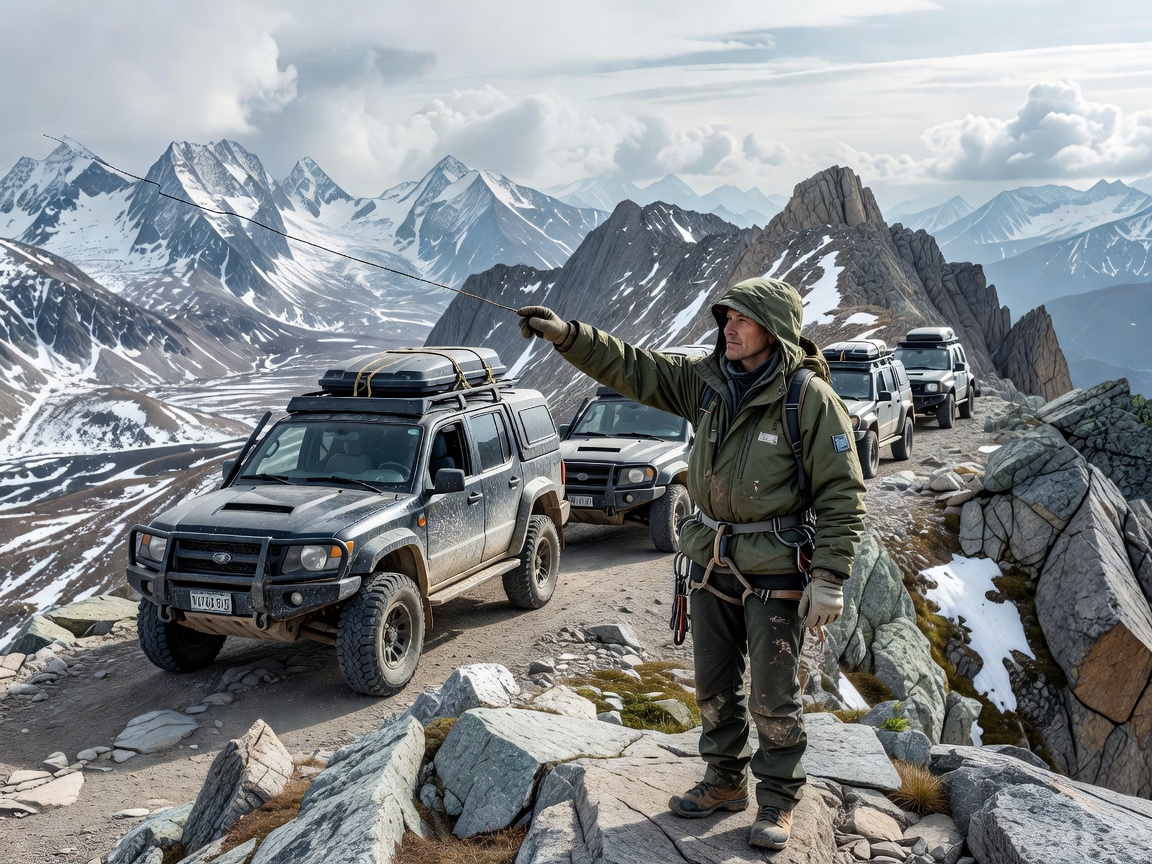
If you've ever found yourself facing a tight 180-degree hairpin on damp shale with a 400-meter drop just beyond your left wheel, you know the sensation: your palms sweat, your breathing gets shallow, and every stone under the tire sounds like an impending collapse. Guided mountain travel turns that panic into methodical competence.
What a Guided Mountain Trip Actually Looks Like
A professionally managed alpine expedition is not an amusement ride where you merely follow tail lights. It is an active masterclass in vehicular control, situational awareness, and convoy synchronization.
Each morning begins with a mandatory briefing covering elevation changes, weather forecasts, route chokepoints, and VHF channel assignments. The lead truck sets the pacing and scans for oncoming local forestry traffic or rockfall, while a designated sweep vehicle carries heavy extraction gear and mechanical diagnostic kits to support anyone encountering difficulty.
Convoy Etiquette and Spacing Rules
Driving in an alpine column is completely different from highway cruising. Tailgating is dangerous, and drifting out of visual contact invites disaster.
- The "Keep in Sight" Rule: Every driver is responsible for the vehicle behind them. If the truck following you drops out of your rear-view mirror at a junction, you stop and wait. This prevents the column from fragmenting.
- Steep Incline Spacing: Never commit to a steep, loose ascent until the preceding vehicle has reached the top and called "clear" over the radio. If the lead truck stalls or slides, you must not be caught in their reverse trajectory.
- Dust & Rock Throw Distance: Keep 50 to 100 meters between vehicles on dry gravel to preserve forward visibility and prevent windshield strikes.
Terrain Awareness: Rock, Shale, and Steep Descents
Going up an alpine pass is primarily a test of traction and cooling; going down is a test of braking discipline and nerve. Novices frequently ride their foot brakes, overheating pads into total hydraulic fade before reaching the valley floor.
A guide trains you to lock the transfer case into low range, engage first or second gear, and let engine compression hold the truck at a controlled 5 km/h walking pace without touching the brake pedal. When crossing jagged scree, your guide gets out on foot, stands in clear view of your driver's side mirror, and directs your front tires with precise hand signals.
The Spotter Principle
There is only one spotter at a time. If three people are shouting instructions from different angles, the driver gets confused and makes fatal mistakes. In our convoys, the designated guide is the sole voice and hand signal you follow.
Guided Travel vs. Solo Exploration: The Honest Trade-Offs
We love solo backcountry trips just as much as anyone, but alpine terrain has zero margin for error. Consider the distinct trade-offs:
| Aspect | Guided Convoy | Independent Solo Trip |
|---|---|---|
| Safety & Extraction | Immediate trained assistance, secondary winches, satellite coms on board. | Self-reliant only; single-point failure can leave you stranded overnight. |
| Route Access | Established knowledge of legal permits, closures, and local trail bylaws. | High probability of running into locked barriers or unauthorized private tracks. |
| Driving Flexibility | Adheres to fixed group pacing and agreed-upon itinerary schedule. | Complete freedom to stop, camp, or alter directions on a whim. |
| Skill Acquisition | Direct real-time feedback on driving line, tire pressure, and throttle control. | Trial by error, which can be costly on transmission and body panels. |
What to Ask Before Booking Any Mountain Expedition
Before signing up with any group or convoy, ask hard, technical questions:
What is the vehicle-to-guide ratio (it should never exceed 5:1)? What medical and wilderness first-aid certifications do the leads hold? What recovery hardware is carried by the sweep truck? What are the minimum tire ratings required of participants? If an organizer answers vaguely or dismisses your concerns, look elsewhere.
Equipping your vehicle correctly is the essential first step before joining any high-altitude group. Check our 4x4 Expedition Preparation Guide and explore our Seasonal Alpine Expeditions Calendar to determine the best window for your vehicle.