A route that is an easy, picturesque family roll in August can be an impassable snow bank in June or an ice trap by late October. To travel responsibly and safely, you must adapt your vehicle, pacing, and mindset to the calendar.
1. Spring: The Thaw, Runoff and Unstable Shoulders (May – June)
Spring is tempting because lower valleys are bursting with green, but high passes (above 1,800m) remain locked under dense, rotten snowpacks called firn. As daily temperatures rise, melting water saturates trail beds, causing mud churn and destabilizing outer road shoulders.
Driving during spring requires extreme environmental sensitivity. Heavy vehicles on saturated alpine soil leave deep ruts that accelerate trail washouts. Many passes remain closed by local forestry authorities until late June. Winching off soft, thawed ground is notoriously unreliable, making this season strictly suitable for lower-elevation exploratory scouting.
2. Summer: Dry Limestone, High Passes and Heat Management (July – August)
Summer is the peak window for high-altitude military routes. The highest passes (2,400m+) finally open, surfaces are firm, and daylight stretches past 21:00.
However, summer introduces its own distinct mechanical challenges:
- Thermal Overheating: Long low-range climbs in 30°C valley heat push coolant and transmission temperatures to the redline. Keep radiators clear of insect accumulation and maintain auxiliary fan circuits.
- Afternoon Convective Storms: Rapid atmospheric heating generates fierce, localized thunderstorms. Dry rock gullies can turn into flash-flooded torrents of mud and boulders within forty-five minutes.
- Trail Crowding: Shared tracks with mountain bikers, hikers, and forestry vehicles demand lower speeds, polite passing manners, and radio monitoring.
The Thermal Inversion Phenomenon
In late summer and autumn, you can camp in freezing valley fog at 1,200 meters, only to wake up and drive through a sea of clouds into 18°C sunshine on a 2,200-meter ridge. Always pack layered technical clothing rather than relying solely on the vehicle's cabin heater.
3. Autumn: Golden Light, Empty Trails, and Black Ice (September – October)
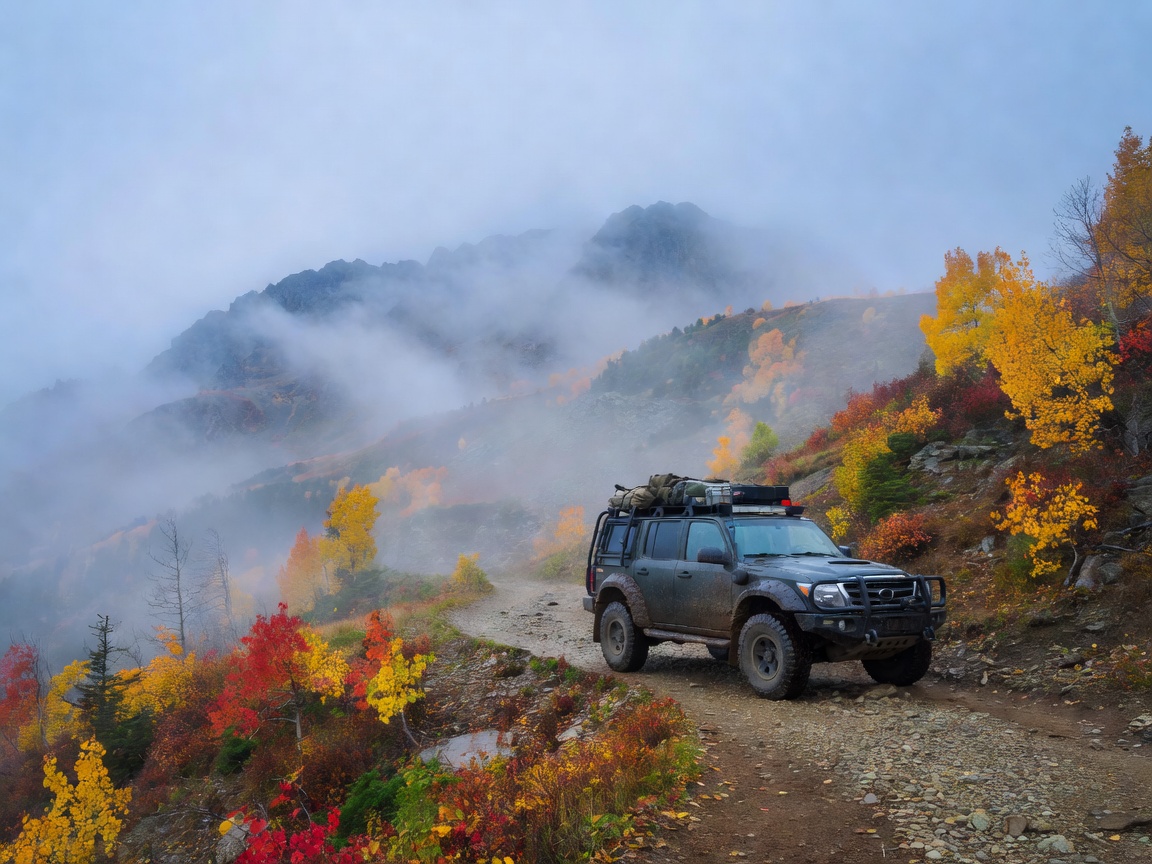
For experienced expedition teams, late September and early October offer the finest conditions. The summer crowds vanish, the air is crystalline, and the alpine foliage turns vivid ochre and amber.
The catch? Rapidly contracting daylight and sub-zero night freezes. Shaded north-facing shelf corners develop lethal patches of black ice where moisture seeps out of rock walls. Summer all-terrain tires with hard rubber compounds harden in the cold, drastically dropping grip. Carrying steel tire chains and checking dusk timing is essential.
4. Winter: Arctic Operations and Total Self-Reliance (November – April)
High alpine passes are closed to wheeled vehicles in winter, and attempting them is both illegal and life-threatening. Lower forestry tracks that remain accessible demand specialized cold-weather preparation:
- 3PMSF-certified winter rubber or aggressive studded setups.
- Diesel anti-gel fuel conditioners to prevent paraffin wax clogging filters at -15°C.
- Dedicated sub-zero recovery hardware (cold makes steel bow shackles and synthetic lines brittle).
- Independent auxiliary vehicle heaters (such as diesel hydronic or forced-air heaters).
Seasonal Comparison Matrix
| Season | Trail Accessibility | Key Technical Challenge | Recommended Driver Level |
|---|---|---|---|
| Spring | Limited; mid-elevation only | Saturated soil, roadbed washouts, snow plugs | Experienced only |
| Summer | Maximum; high passes open | Cooling capacity, severe convective storms | All levels (with prep) |
| Autumn | High until first heavy snowfall | Short daylight, black ice on north faces | Intermediate to Advanced |
| Winter | Restricted to low trails only | Sub-zero mechanical brittleness, avalanche risk | Specialized Arctic crews |
How to Choose Your Expedition Window
If you are new to alpine 4x4 travel, target mid-July through early September. You will enjoy reliable pass conditions, long daylight margins for mechanical setbacks, and open mountain refuge shelters.
Ensure your equipment aligns with the season by reviewing our Vehicle Preparation Guide, and study our convoy support options on the Guided Alpine Trips page.