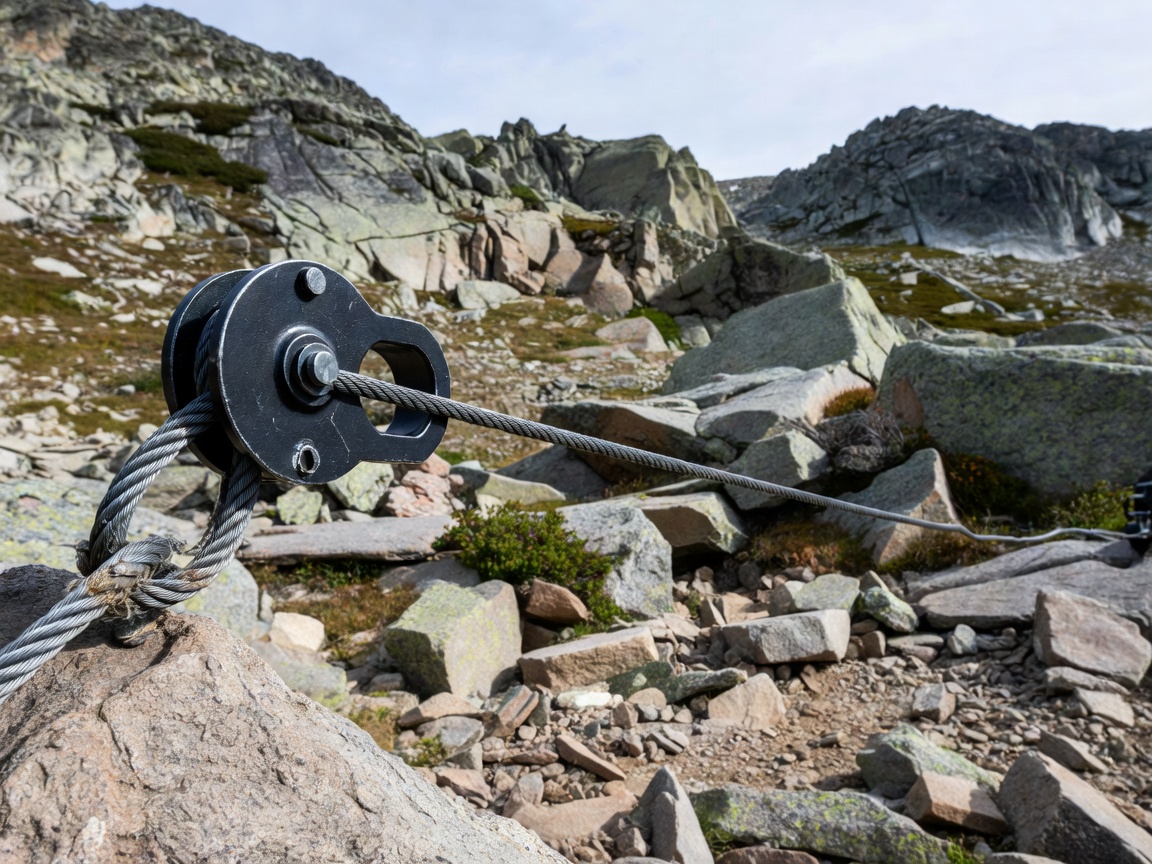
Off-road recoveries look exciting in promotional videos, but anyone who has run winches under real tension knows that a stored kinetic load is lethal if released improperly. The first rule of alpine recovery is simple: pause, step back, and breathe before touching any equipment.
1. The Anatomy of Rated Recovery Points
The factory loop welded underneath your vehicle's bumper is almost certainly a shipping tie-down point, designed only to hold the car steady on a transport trailer. It is NOT engineered for the dynamic loads of a vehicle stuck in deep shale or mud.
A true rated recovery point is bolted directly to the chassis frame horns using Grade 8.8 or Grade 10.9 high-tensile hardware. When rigging an extraction, use an equalizer bridle connected between both chassis rails. This halves the load across each point and prevents frame twisting.
2. Winch Considerations in Mountain Environments
Electric winches are standard equipment on serious expedition trucks, but alpine operations present specific hazards:
- Synthetic Line vs. Steel Cable: In mountain terrain, synthetic line is far superior. It is significantly lighter, does not store dangerous recoil kinetic energy if severed, and won't form razor-sharp wire burrs when dragged across limestone ledges.
- Tree Trunk Protectors & Rock Anchors: Alpine flora is fragile. Never wrap a bare winch rope around an alpine larch or pine. Always employ a broad 75mm polyester tree-trunk protector. If winching from natural rock formations, inspect the boulder for stability before applying load.
- Winch Line Dampeners: Even when using synthetic line, placing a weighted dampener over the middle third of the line keeps it grounded if an anchor shears.
3. Traction Boards: Low-Risk First Line of Defense
Before unspooling a winch or breaking out dynamic straps, traction boards (like MAXTRAX) should be your primary extraction option. They introduce zero dynamic tension and allow the stuck vehicle to drive itself forward cleanly.
Clear shale or mud from in front of the tire tread, wedge the leading teeth firmly under the tire at a 45-degree angle, and gently crawl forward in low gear without spinning the wheels. Spinning melts the traction teeth instantly.
The "No-Go" Decision: When to Call Professional Mountain Rescue
If a vehicle's downhill tires have breached an unreinforced road shoulder and the chassis is perched on its skid plates above a sheer drop, DO NOT attempt an amateur kinetic snatch pull. The sudden impulse force will break the remaining soil shear plane. Secure the vehicle to an uphill anchor with a static strap and call regional mountain rescue services.
4. Comparing Self-Recovery Equipment Categories
Carrying the wrong gear for the terrain is just as bad as having no gear at all. Here is how standard recovery systems stack up in rocky alpine settings:
| Equipment Category | Alpine Utility | Primary Risk Factor |
|---|---|---|
| Traction Boards | High on loose scree, wet grass, and melting snowdrifts | Can turn into projectiles if driver spins tires carelessly |
| Kinetic Snatch Ropes | Low in alpine settings; rarely suitable for narrow shelf tracks | Violent elasticity can pull the recovery vehicle over an edge |
| Synthetic Winch System | Highest control; enables centimeter-by-centimeter repositioning | Heavy electrical drain; risk of anchor point failure under high angles |
| Exhaust Air Jack | Moderate on soft ground for tire changes or rock packing | Extremely vulnerable to punctures from sharp limestone edges |
5. Pre-Departure Safety Checklist
Before turning off the asphalt onto any unmaintained mountain track, review this physical check:
- Rated soft shackles or bow shackles inspected with no distortion or hairline cracks.
- Winch remote controller charged and test-spooled before hitting the trail.
- Heavy-duty gloves readily accessible in the cabin, not buried in the back.
- Trauma-certified medical kit mounted within reach of the driver.
- Fire extinguisher mounted securely on a quick-release metal bracket.
Remember: the best recovery is the one you never had to perform. Careful Mountain Route Planning and solid Vehicle Preparation will keep you out of bad situations in the first place.